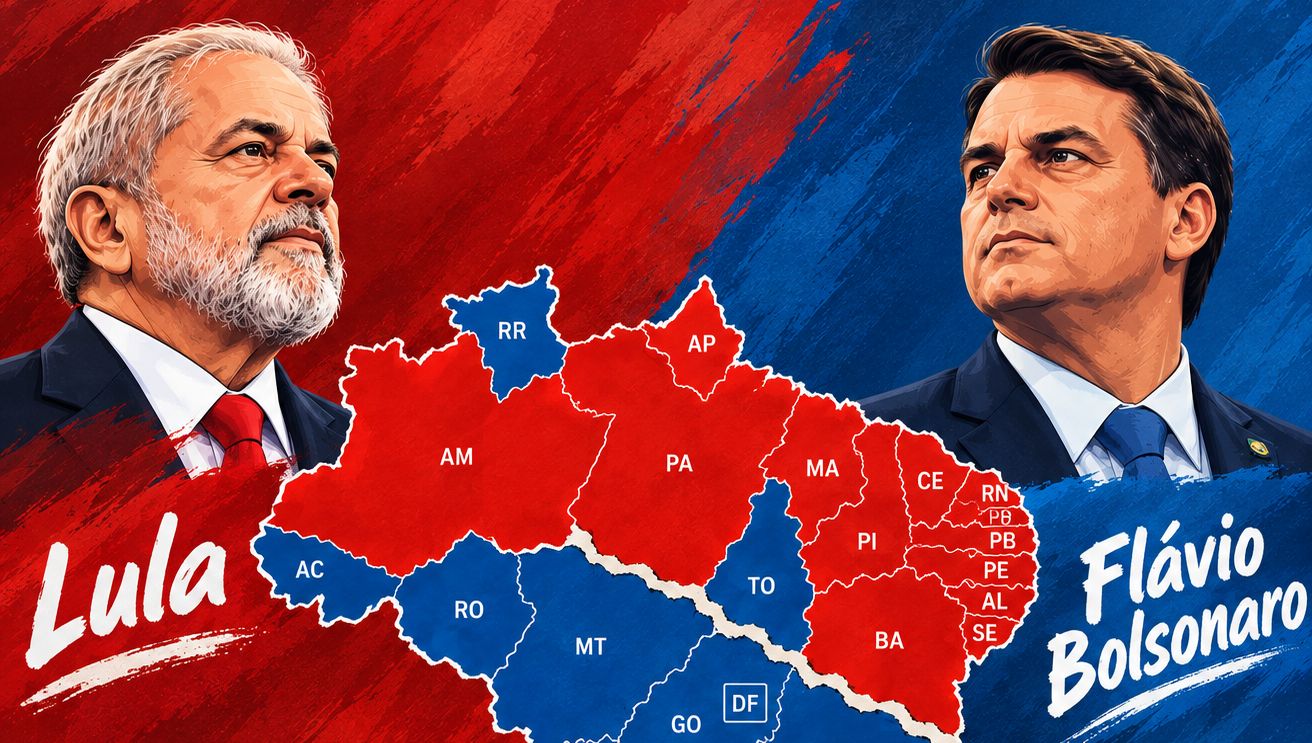
Brazil Elections 2026
Brazil held a mega election on 4 October 2026. Even if most (especially international) attention was given to the presidential elections, also the full chamber of deputies (513), 54 of 81 senators, all governors and state parliaments were also elected. The national result in the presidential race was close, even if most polling institutes saw Lula leading. With the first round fully counted, Flávio Bolsonaro received 47.03% of valid votes, compared with 45.16% for Lula, a difference of 1.87 percentage points. The two candidates will meet again in the runoff on 25 October.
However, the national figures conceal an enormous regional contrast.
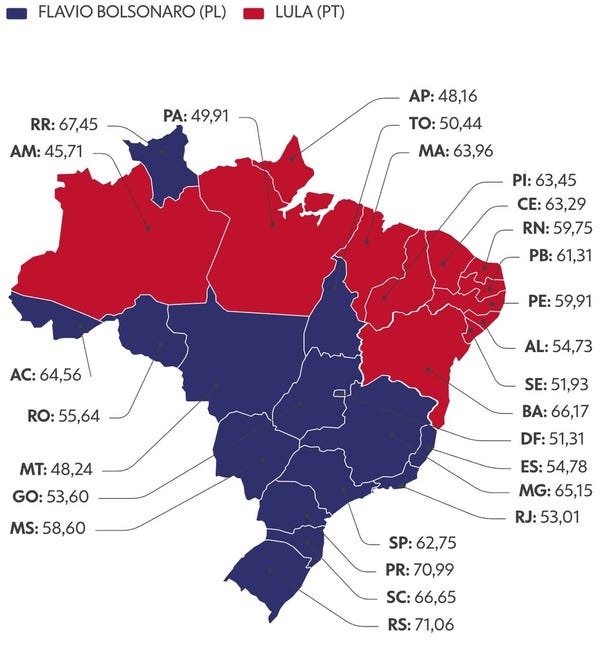
Flávio Bolsonaro finished first in 14 states and the Federal District (Brasilia), while Lula led in 12 states. Bolsonaro’s victories covered the entire South and Southeast, all of the Centre-West, and four of the seven states in the North. Lula, by contrast, won all nine states of the Northeast (on the map from MA-Maranhao until BA-Bahia) and three states in the North: Amazonas, Pará and Amapá.
The contrast is particularly striking when comparing the Northeast with the South.
The Northeast gave Lula approximately 11.1 million more votes than Bolsonaro. In the South, however, Bolsonaro received roughly 5 million more votes than Lula. In the Southeast, his advantage was another 5.7 million votes. Together, the South and Southeast produced a 10.7-million-vote advantage for Flávio, almost offsetting Lula’s lead in the Northeast.
This division can be observed on all levels. While the Bolsonaro party PL was the great winner of these elections, which won 19 of the 54 senate mandates (2/3 were to be elected of a total of 81), it couldn’t win even one in the nine Northeastern states. Lula’s Woker’s party on the other side has been reduced to a regional party with almost only strong results in the Northeast and North.
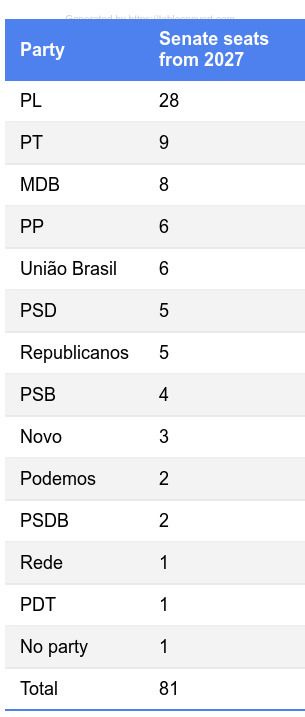
The PL therefore has more than three times as many senators as the PT and is far ahead of every other individual party.
Even not as articulated, there is a similar picture in the chamber of deputies. The PL is by far the strongest party with 121 deputies out of 513 mandates. The PT in an election coalition with smaller parties reached 88 seats, shortly ahead of a centrist election alliance with 87.
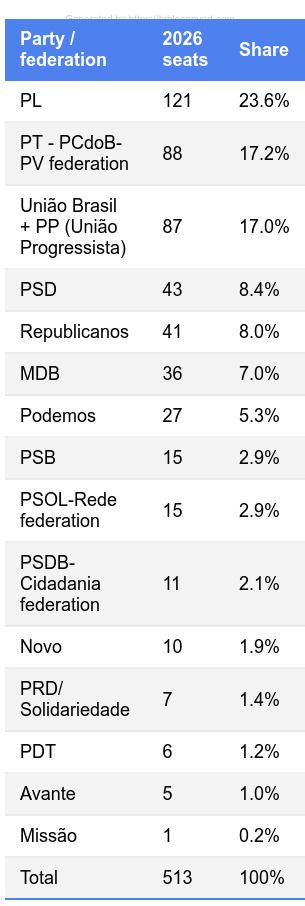
With this election result for the senate and the house of representatives, the PL is by far the strongest player, the traditional centre-right parties have been losing influence and other extreme right-wing parties (e.g. Novo) were insignificant. Brazil not only moved to the right, but to the extreme right, which is now the dominant political force.
Neither Flávio Bolsonaro nor Lula would automatically have a governing majority simply by winning the presidency. But a president from the PL would enter office with his own party holding 121 of 513 Chamber seats and 28 of 81 Senate seats, giving the Bolsonaro camp a much stronger parliamentary starting position.
Even if Lula won on 25 October, something already very difficult, because usually the winner of the first round also wins the second round, he would face a very hostile congress and would have a very hard time governing. Still, the president has a lot of weight and could balance the extreme right and prevent excesses of the Trump-aligned Bolsonaro-party.
The slimmer of hope that the Lula campaign still has, is that 33 million Brazilians didn’t vote, in a country with compulsory voting and still almost six million voted blank or invalid, together almost 40 million voters. The Lula campaign will try to focus on these voters, to motivate more of the traditional Lula voters who stayed at home and to convince voters who voted blank/invalid of the danger of having the extreme right in total power. Since the country is so polarized and the rejection of both candidates within the other camp so high, there is almost no possibility of reaching the other camp, the fight is for those not having voted and the blank/invalid votes.
With Bolsonaro winning the presidency, Brazil would become one more country governed by the extreme right in Latin America, only leaving Mexico and Uruguay to the centre-left. Latin America would largely become a US-colony. For civil society, the Amazon, the indigenous, climate policies, women, Afro-Brazilians, the universities, independent media … this would be very bad news as we’ve already seen in many other countries in recent times where the extreme right won.